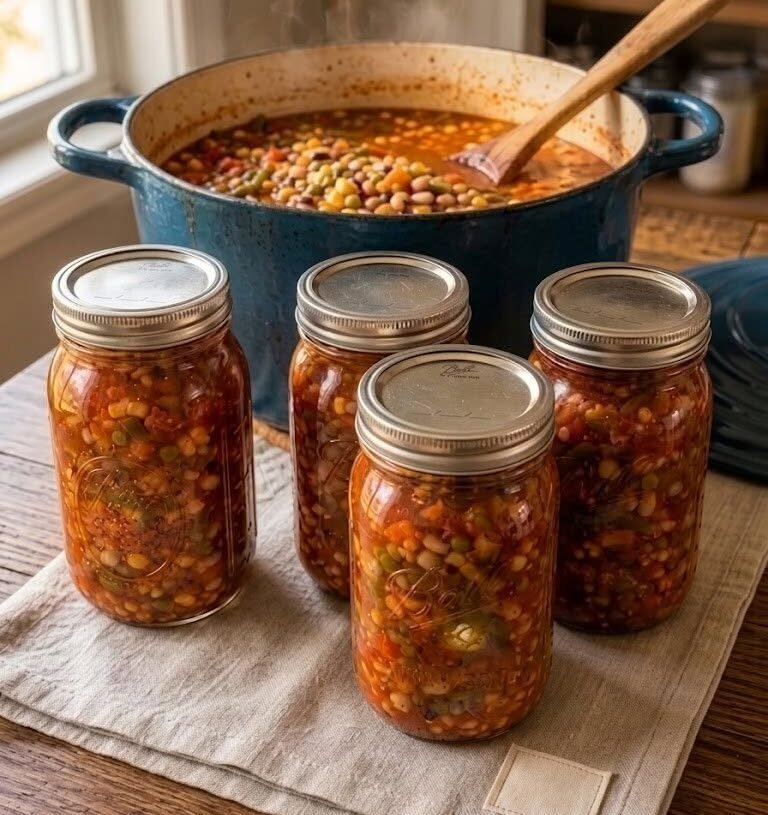
Description:
Preserve the vibrant flavors of the harvest with this wholesome, home-canned vegetable soup. Packed with garden-fresh green beans, tender carrots, crisp celery, sweet onions, and crushed vine-ripened tomatoes suspended in an herb-infused broth, this shelf-stable pantry staple brings comforting warmth to your kitchen on busy weeknights. Because it is preserved naturally using pressure canning, it contains zero commercial thickeners, artificial stabilizers, or excess sodium. It serves as an effortless, low-carb starter or base to enrich with shredded chicken, browned ground beef, or poached eggs for a fast, high-protein meal.
AdBlock Detected ⚠️
Please disable your ad blocker to support our website.
Advertising keeps our content free for everyone.
Can This Canned Vegetable Soup Support Weight Loss Goals?
Yes, home-canned vegetable soup is an exceptional ally for mindful weight management because it utilizes high-volume, low-energy-density nutrition to promote lasting satiety. The non-starchy vegetables provide dietary fiber and water content, which naturally expand in the stomach and slow gastric emptying to keep hunger signals at bay. Enjoying a bowl before your main course or using it to simmer lean proteins creates deeply satisfying, low-calorie meals that make maintaining a caloric deficit effortless.
Does Canned Vegetable Soup Fit a High Protein Lifestyle?
Supplying only 7g of net carbs per generous 1-cup serving with zero added starches or pasta, this recipe fits right into a structured, high-protein lifestyle. While the vegetables provide essential electrolytes, fiber, and micronutrients, the soup is deliberately formulated as an adaptable broth base that pairs with cooked lean meats, bone broth, or plant proteins. Adding 4 to 6 ounces of shredded chicken breast or 93/7 lean ground beef transforms each jar into a quick, complete meal boasting over 35g of protein with minimal carbohydrate overhead.
My Personal Experience
-
Pressure Canning Safety Precision:
Processing at 10 to 11 pounds of pressure for the full recommended time ensured that all low-acid vegetables reached a certified sterile internal temperature. It gave complete peace of mind that every jar was shelf-stable without requiring artificial preservatives.
-
Firm Veggie Dice Technique:
Cutting carrots, celery, and green beans into uniform 3/4-inch pieces prevented them from turning into mush during high-pressure processing. The vegetables retained a pleasant, tender-crisp bite with distinct shapes in every spoonful.
-
The 1-Inch Headspace Rule:
Leaving an exact 1-inch headspace and thoroughly debubbling around the jar perimeter eliminated liquid siphoning. Every jar pulled a concave, vacuum seal that stayed tight in long-term pantry storage.
Perfect For:
-
High-Protein Meal Prep: Pour a quart into a saucepan and stir in shredded rotisserie chicken or browned lean beef for a 5-minute high-protein dinner.
-
Low-Carb & Keto Diet Plans: A sugar-free vegetable soup base that keeps net carbs under 10 grams while delivering real comfort food satisfaction.
-
Pantry Emergency Meals: Keeps wholesome, ready-to-heat garden nutrition right in your cupboard for busy weeknights or cold winter evenings.
-
Light High-Protein Lunches: Pair a warm bowl with a side of low-fat cottage cheese or a hard-boiled egg plate for an energizing midday meal.
Why You’ll Love This Recipe:
-
Pure Garden Goodness Year-Round:
Captures peak-season vegetable flavor and nutrients, so you never have to settle for watery, tinny supermarket cans.
-
Free from Starch Fillers:
Contains zero added flour, cornstarch, noodles, or heavy cream, keeping macros clean and the broth clear.
-
Pressure-Canned Shelf Stability:
Properly sealed jars remain fresh and nutrient-dense in a cool pantry for 12 to 18 months with zero refrigeration required.
-
Endless Culinary Versatility:
Works equally well as a standalone light broth, a braising liquid for roasts, or a foundation for hearty meat stews.
Common Mistakes to Avoid:
-
Water-Bath Canning Instead of Pressure Canning: Low-acid vegetables (carrots, green beans, onions, celery) support Clostridium botulinum spores; they must be processed in a pressure canner to reach 240°F (116°C).
-
Adding Pasta, Rice, or Flour Before Canning: Starches interfere with the canner’s heat penetration and can harbor bacteria; always add noodles or rice after opening the jar at mealtime.
-
Overcooking the Vegetables in the Pre-Boil: Boiling the raw vegetables on the stove for too long before jarring results in a limp, disintegrated soup after pressure processing.
-
Skipping Jar Rim Wiping: Failing to wipe the jar rims with a vinegar-dampened towel leaves microscopic vegetable particles or minerals that prevent an airtight seal.
Required Equipment:
-
Pressure Canner with Steam Gauge/Weight: Achieves the 240°F (116°C) internal heat required to safely preserve low-acid vegetables.
-
Pint or Quart Mason Canning Jars with New Lids: Forms an airtight hermetic vacuum seal that keeps the preserved soup shelf-stable.
-
Jar Lifter: Securely grips and transfers hot, heavy glass jars into and out of the canner without tilting.
-
Canning Funnel & Non-Metallic Bubble Popper: Prevents spills along jar rims and dislodges trapped air pockets before sealing.
-
Large Stainless Steel Stockpot: Heats the broth and vegetables evenly without reacting to the natural acidity of tomatoes.
Storage Instructions:
-
Pantry Storage (Sealed Jars): Store cooled, sealed jars without their outer metal screw bands in a cool, dark, and dry pantry (50°F–70°F) for 12 to 18 months.
-
Refrigerator Storage (Opened Jars): Once opened, refrigerate the jar immediately and consume within 4 to 5 days.
-
Freezer Alternative: If you do not have a pressure canner, ladle the cooked and cooled soup into freezer-safe containers (leaving 1-inch headspace) and freeze for up to 6 months.
Recipe Details:
-
Preparation Time: 30 minutes
-
Stovetop Pre-Cook Time: 5 minutes
-
Pressure Processing Time: 60 minutes for pints / 75 minutes for quarts (Adjust for altitude)
-
Total Time: ~2 hours (including depressurization)
-
Servings: 8 pints (or 4 quarts) / approx. 8 to 10 one-cup servings
-
Best Season for This Recipe: Late summer to early autumn (during peak garden harvest of fresh green beans, tomatoes, and root crops)
-
Total Calories (Per Serving): ~55 kcal (approximate estimate)
Short Description:
A classic, farm-fresh vegetable soup packed with green beans, carrots, celery, and tomatoes in an aromatic herb broth. Pressure-canned for safe, long-term shelf storage with zero artificial thickeners or excess sodium. The ultimate low-carb pantry base to upgrade with your favorite lean proteins.
📝 Ingredients:
-
Crushed or Diced Tomatoes (in Juice): 4 cups (approx. 900 g) (canned or blanched fresh peeled tomatoes; provides a rich, savory broth base).
-
Fresh Green Beans: 3 cups (approx. 350 g), washed, ends trimmed, and cut into 3/4-inch pieces.
-
Carrots: 3 cups (approx. 400 g), peeled and cut into 1/2-inch uniform slices.
-
Celery: 2 cups (approx. 250 g), washed and sliced into 1/2-inch half-moons.
-
Yellow or White Onions: 2 cups (approx. 300 g), peeled and chopped into 1/2-inch dice.
-
Fresh Garlic: 4 cloves, finely minced.
-
Low-Sodium Vegetable Broth or Water: 6 cups (approx. 1.4 liters) (or homemade unsalted bone broth).
-
Canning & Pickling Salt (Optional): 1/2 teaspoon per pint jar (or 1 teaspoon per quart jar) (pure non-iodized salt preserves clear broth).
-
Dried Italian Herb Blend (Thyme, Oregano, Basil): 1.5 tablespoons (seasoning without adding starches).
-
Freshly Cracked Black Pepper: 1 teaspoon.
-
Dried Bay Leaves: 1 small leaf per jar.
Directions:
-
Prep the Canner and Jars:
Wash 8 pint (or 4 quart) mason jars and bands in hot, soapy water. Place jars into your pressure canner with 2 to 3 inches of simmering water to keep them hot until filling. Wash flat lids and set aside.
-
Combine and Pre-Cook the Soup (Medium-High Heat):
In a large stainless steel stockpot, combine the crushed tomatoes, green beans, sliced carrots, celery, diced onions, minced garlic, dried Italian herbs, and black pepper. Pour in the 6 cups of broth or water. Set over medium-high heat and bring to a gentle boil.
-
Short Simmer (Low Heat):
Once bubbling, drop the heat to low and simmer uncovered for exactly 5 minutes. Do not overcook; the vegetables should remain firm, as they will cook fully during pressure processing.
-
Pack Hot Jars and Measure Headspace:
Use a jar lifter to pull one hot jar from the canner, emptying any water back into the pot. Add 1/2 teaspoon of canning salt (if using) and 1 small dried bay leaf into the bottom. Place a canning funnel over the jar and ladle in the hot vegetables and broth, filling to roughly equal parts solids and liquid. Leave a strict 1-inch (2.5 cm) headspace at the top.
-
Debubble and Clean Rims:
Slide a non-metallic bubble popper down the sides of the jar, gently pressing inward to dislodge trapped air pockets. Re-check the headspace and add or remove liquid to keep it at exactly 1 inch. Wipe the jar rim thoroughly with a clean paper towel dampened with white vinegar to remove any oil or food residue. Center a flat lid on top and screw the band down until fingertip-tight.
-
Vent the Pressure Canner (High Heat):
Lower the filled jar back onto the rack inside the canner. Repeat with remaining jars. Lock the canner lid securely with the vent pipe open. Turn the heat to high. Allow steam to escape from the vent pipe in a steady, vigorous funnel for 10 full minutes to exhaust all trapped room air.
-
Process Under Pressure:
Place the counterweight or pressure regulator on the vent pipe. Bring the canner up to 10 pounds of pressure on a weighted gauge (or 11 pounds on a dial gauge; adjust for your elevation). Once target pressure is reached, adjust burner heat to maintain steady pressure and process:
-
Pints: 60 minutes
-
Quarts: 75 minutes
-
-
Natural Depressurization & Cooling:
When the timer expires, turn off the burner completely. Let the canner sit undisturbed and depressurize naturally until the gauge reads zero and the safety lock drops down (never force-cool a canner). Wait 10 minutes, unlock the lid, and lift the jars straight out with a jar lifter onto a towel-lined counter. Let jars cool undisturbed for 12 to 24 hours.
-
Inspect Seals and Store:
Check the lids; the centers should be concave and firm with no flex. Remove the bands, wipe down the jars, label with the date, and store in a cool, dark pantry.
Nutrition Facts (Per Serving – Approximate):
-
Calories: 55 kcal
-
Fats: 0.5 g
-
Cholesterol: 0 mg
-
Sodium: 160 mg (with canning salt) / 45 mg (without salt)
-
Potassium: 340 mg
-
Total Carbohydrates: 10.5 g
-
Fiber: 3.5 g
-
Net Carbs: 7.0 g
-
Sugars: 5.0 g
-
Protein: 2.0 g
-
Calcium: 45 mg
Notes:
-
High-Protein Meal Assembly: Empty one quart of soup into a pot, bring to a simmer, and stir in 1 pound of cooked shredded chicken breast or browned 90/10 lean ground beef for a 35g+ protein dinner.
-
Elevation Adjustments: For weighted gauges, use 15 psi at elevations above 1,000 feet. For dial gauges, use 12 psi (2,001–4,000 ft), 13 psi (4,001–6,000 ft), or 14 psi (6,001–8,000 ft).
-
Vegetable Substitutions: You can safely add sliced zucchini, yellow squash, or diced peppers as long as the total vegetable-to-liquid ratio remains consistent.
-
Unsealed Jar Protocol: If any jar lid flexes after 24 hours, refrigerate it immediately and consume within 4 days, or freeze it.
AdBlock Detected ⚠️
Please disable your ad blocker to support our website.
Advertising keeps our content free for everyone.