Description
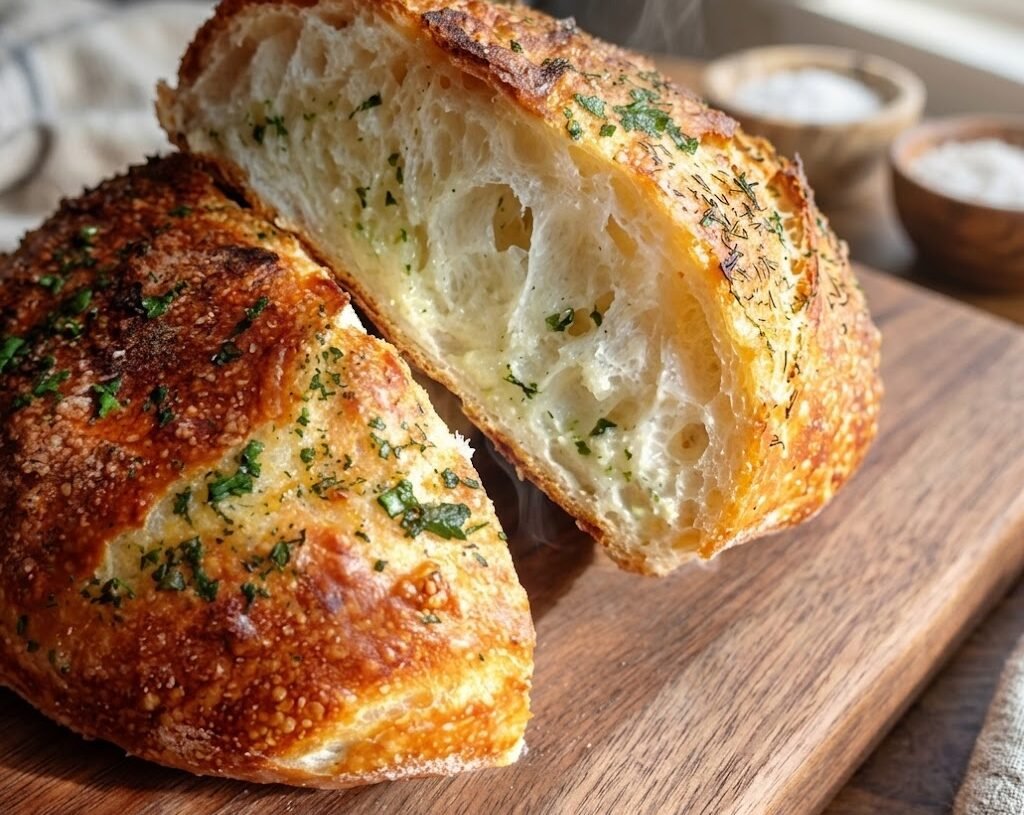
There’s something truly magical about pulling a golden, crusty loaf of garlic herb bread from a Dutch oven. This recipe delivers a crispy, crackly exterior with a soft, airy interior infused with aromatic garlic and fresh herbs. It fills your kitchen with an irresistible aroma and creates that artisan bakery experience at home .
AdBlock Detected ⚠️
Please disable your ad blocker to support our website.
Advertising keeps our content free for everyone.
Can This Garlic Herb Dutch Oven Bread Support Weight Loss Goals?
This bread is best enjoyed as part of a balanced lifestyle rather than a dedicated weight loss food. Traditional Dutch oven bread made with all-purpose flour provides energy but is not specifically formulated for weight loss. For those focused on high protein, low carb recipes, consider alternative versions using almond flour, psyllium husk, and egg whites, which can reduce net carbs while increasing protein content .
Does Garlic Herb Dutch Oven Bread Fit a High Protein Lifestyle?
In its classic form, this bread is not specifically designed for a high protein lifestyle, offering only about 4-5g of protein per serving . However, high-protein adaptations exist using ingredients like almond flour, egg whites, whey protein powder, and Greek yogurt, which can boost protein to 10-11g per slice while reducing net carbs to around 2-5g . Choosing blanched almond flour and whole psyllium husks creates a gluten-like structure that mimics traditional bread texture .
My Personal Experience
-
The Dutch oven is the secret to that perfect crust – Preheating the pot creates trapped steam that allows the crust to expand and develop a beautiful golden, crackly exterior before it sets, giving artisan-quality results every time .
-
Letting the dough rest for 12-18 hours makes all the difference – This no-knead method allows the gluten to develop naturally, creating a tender, chewy crumb with minimal effort and amazing flavor depth .
-
Fresh herbs and real garlic are non-negotiable here – Using fresh rosemary, thyme, and minced garlic transforms the bread from plain to spectacular, infusing every bite with vibrant, aromatic flavor that dried herbs simply can’t match .
-
Cooling completely before slicing is worth the wait – Cutting into warm bread may be tempting, but allowing it to cool on a wire rack for at least 30 minutes prevents a gummy texture and lets the crumb set perfectly .
Perfect For
-
Cozy dinner sides, soup pairings, or holiday gatherings where you want to impress guests with homemade artisan bread.
-
Weekend baking projects when you have time for the long, no-knead rise (12-18 hours) and want minimal hands-on work.
-
Making sandwiches, bruschetta, or serving with olive oil and balsamic vinegar for dipping.
-
Keto diet plans when adapted with almond flour, psyllium husk, and flaxseed meal for a low-carb, high-protein alternative .
Why You’ll Love This Recipe
-
Incredibly easy for beginner bakers – The no-knead method means you mix everything in one bowl, let time do the work, and shape the dough with almost no effort required .
-
That crispy, artisan crust is guaranteed – Baking in a preheated Dutch oven traps steam, creating the perfect golden, crackly exterior that rivals your favorite bakery loaf .
-
The garlic and herb flavor permeates every bite – Fresh minced garlic and aromatic rosemary, thyme, and parsley are mixed throughout the dough, ensuring each slice is packed with savory goodness .
-
Versatile enough for any meal – Enjoy it warm with butter, use it for sandwiches, toast it for breakfast, or serve alongside soups, salads, and pasta dishes .
Common Mistakes to Avoid
-
Not preheating the Dutch oven – Placing dough into a cold pot prevents the trapped steam needed for a crispy crust; always preheat the empty pot for at least 30 minutes .
-
Using water that’s too hot for the yeast – Water above 120°F kills the yeast, stopping fermentation and preventing the bread from rising properly; stick to lukewarm water (around 110°F) .
-
Skipping the long rise time – The 12-18 hour no-knead fermentation develops gluten and flavor naturally; rushing this step results in a dense, flavorless loaf .
-
Slicing while still warm – Cutting too early releases steam and creates a gummy, sticky interior; always let the bread cool completely on a wire rack before slicing .
Required Equipment
-
Dutch oven (4-6 quart) – Traps steam during baking, ensuring a perfectly crisp, golden crust and even cooking throughout .
-
Parchment paper – Acts as a sling to safely transfer sticky dough into the hot pot without burning yourself or misshaping the loaf .
-
Large mixing bowl – Provides plenty of room for mixing the dough and allowing it to rise without spilling over .
-
Wire cooling rack – Allows air to circulate around the bread, preventing a soggy bottom and ensuring the crust stays crispy .
Storage Instructions
Store leftover bread wrapped tightly in plastic wrap or foil at room temperature for 2-3 days. For longer freshness, refrigerate for up to a week, or slice and freeze in an airtight container for up to 3 months. Reheat frozen slices directly in a toaster or warm in the oven at 350°F for 5-10 minutes to restore crispness .
Recipe Details
Preparation Time: 15 minutes (plus 12-18 hours rise time)
Cooking Time: 45-50 minutes
Total Time: ~13-19 hours
Servings: 8-12 slices
Best Season for This Recipe: All-season (especially cozy in autumn and winter)
Total Calories (Per Serving): Approximately 150-180 kcal (approximate estimate)
This classic garlic herb Dutch oven bread is everything you want in homemade bread—crispy, fragrant, and incredibly satisfying. Whether you’re new to baking or a seasoned pro, this recipe delivers artisan results with minimal hands-on effort.
📝 Ingredients
-
3 cups all-purpose flour, plus additional for dusting
-
1 packet (2¼ tsp) active dry yeast or ½ tsp instant yeast
-
1½ tsp salt
-
1½ cups warm water (about 110°F)
-
3-4 cloves garlic, minced
-
1 tbsp fresh rosemary, chopped
-
1 tbsp fresh thyme, chopped
-
1 tbsp fresh parsley, chopped (optional)
-
1-2 tbsp olive oil
Directions
-
Mix the dough – In a large bowl, combine flour, salt, and yeast (if using instant yeast). Add warm water, minced garlic, fresh herbs, and olive oil. Stir until a shaggy dough forms and no dry flour remains .
-
First rise (12-18 hours) – Cover the bowl with plastic wrap or a clean kitchen towel. Let it rest at room temperature for 12-18 hours until bubbly and doubled in size. This long fermentation develops flavor and texture .
-
Shape the dough – Turn the dough onto a lightly floured surface. Gently shape it into a round ball, being careful not to deflate it too much. Place on a piece of parchment paper .
-
Second rise (1-2 hours) – Cover the dough with a towel and let it rest for 1-2 hours to puff up slightly .
-
Preheat the Dutch oven – About 30 minutes before baking, place your Dutch oven with the lid on into the oven. Preheat to 450°F (230°C) .
-
Bake covered – Carefully remove the hot Dutch oven. Using the parchment paper as a sling, lower the dough into the pot. Cover with the lid and bake for 30 minutes .
-
Bake uncovered – Remove the lid and bake for an additional 15-20 minutes until the crust is deep golden brown and sounds hollow when tapped .
-
Cool completely – Transfer the bread to a wire rack using the parchment paper. Let cool for at least 30 minutes before slicing to ensure the crumb sets properly .
Nutrition Facts (Per Serving – Approximate)
-
Calories: 150-180 kcal
-
Fats: 2-5g
-
Cholesterol: 0mg
-
Sodium: 220-295mg
-
Potassium: ~100mg
-
Total Carbohydrates: 30-31g
-
Fiber: 1-2g
-
Net Carbs: ~29g
-
Sugars: 0-1g
-
Protein: 4-5g
-
Calcium: ~1-2mg
Notes
-
Storage – Keep wrapped at room temperature for 2-3 days or refrigerate for up to a week. Freeze sliced for up to 3 months .
-
Reheating – Warm slices in a toaster or oven at 350°F for 5-10 minutes to restore crispness .
-
Allergy notes – Contains gluten (wheat flour). For gluten-free, high-protein alternatives, substitute almond flour and psyllium husk .
-
Flavor boosts – Add shredded cheese, sundried tomatoes, or olives to the dough before baking for variation .
Frequently Asked Questions
Can I use dried herbs instead of fresh? Yes, use about 1 teaspoon of dried herbs for every tablespoon of fresh, but fresh herbs provide a brighter, more vibrant flavor .
Why did my bread turn out dense? This usually happens from not allowing the full 12-18 hour rise time, using water that’s too hot (killing the yeast), or slicing the bread while still warm .
Can I make this bread gluten-free? Yes, by using a combination of almond flour, psyllium husk, and flaxseed meal as a substitute for all-purpose flour .
Do I have to use a Dutch oven? The Dutch oven is essential for creating the steam that produces a crispy, artisan crust. A heavy oven-safe pot with a lid can work as an alternative .
How can I add more protein to this bread? Substitute ½ cup of almond flour for some of the all-purpose flour, or use a high-protein flour alternative. Adding egg whites or whey protein powder also boosts protein content .
Can I freeze the dough instead of baking immediately? Yes, freeze the shaped dough on parchment paper, then transfer to a freezer bag. When ready to bake, thaw overnight in the refrigerator and proceed with the second rise and baking steps.
AdBlock Detected ⚠️
Please disable your ad blocker to support our website.
Advertising keeps our content free for everyone.